The software behind two autonomous cooking robots, from concept to rollout readiness.
Lab2Fab is the software side of a program Icon Group and Middleby built around two autonomous cooking robots: FRYBOT, which runs the fry station end to end, and PizzaBot, which sauces, tops and ovens a pizza. The program was headed for a rollout at Sonic Drive-In, Inspire Brands’ ~3,400-store chain. The engagement covered the software, the roadmap, and the three organizations that had to move as one backlog.
FRYBOT in production: hardware by Middleby, software by Icon Group, at Sonic Drive-In.
Working concept
Concept
What does the station have to do, end to end?
FRYBOT and PizzaBot arrived as working concepts. The program wrote them into one roadmap, with acceptance criteria the three organizations could read the same way.
The program’s path, drawn. A marker walks the five stages the software crossed, from a working concept to a release a store could take. The three lanes are the organizations that had to move together; the marks stand for where each was working, and a star is a hand-off between them that had to clear. The marks are illustrative. The backlog itself is the client’s.
The brief
Icon Group writes the software that turns a Middleby cooking appliance into an autonomous station. The brief was to carry its two active robots, FRYBOT and PizzaBot, from working concepts through the engineering, integration and partner work a chain rollout asks for, and to a release the deployment partner could put in a store.
The work sat across three organizations. Icon wrote the software. Middleby built and serviced the hardware. Sonic Drive-In, owned by Inspire Brands, was the chain the first rollout was built for. A twenty-plus person team worked across them. The program kept one roadmap and one backlog, and tracked readiness against the stories groomed into that backlog, not against guesses.
Why the fry station
Quick-service restaurants were short-staffed through the program, and the fry station was among the hardest positions to fill. FRYBOT was built to run it: the arm handles the baskets, the control system times the cook, and the software records every cycle. PizzaBot addresses a second hot station, where sauce, cheese and toppings have to be placed to an order before the pie reaches the oven.
~3,400
Sonic Drive-In stores in the United States, the chain footprint FRYBOT was engineered to reach.
$33.4B
Inspire Brands’ reported 2024 system sales, the parent company whose room the program was built for.
100+
Foodservice equipment brands reported under Middleby, the hardware partner that built the arms.
3 → 1
Organizations held on one roadmap and one backlog. The program was the piece that kept them aligned.
Figures: Inspire Brands annual report for fiscal 2024, Sonic’s U.S. store count on its own site, and Middleby’s published brand portfolio. The last figure describes the program’s own operating model.
The two robots
FRYBOT carried the program through its first rollout. PizzaBot followed the same concept-to-rollout path on a hotter, higher-variability station. The stills below are FRYBOT in production; the videos are product introductions by L2F, Inc. (Lab2Fab), shown here for context.
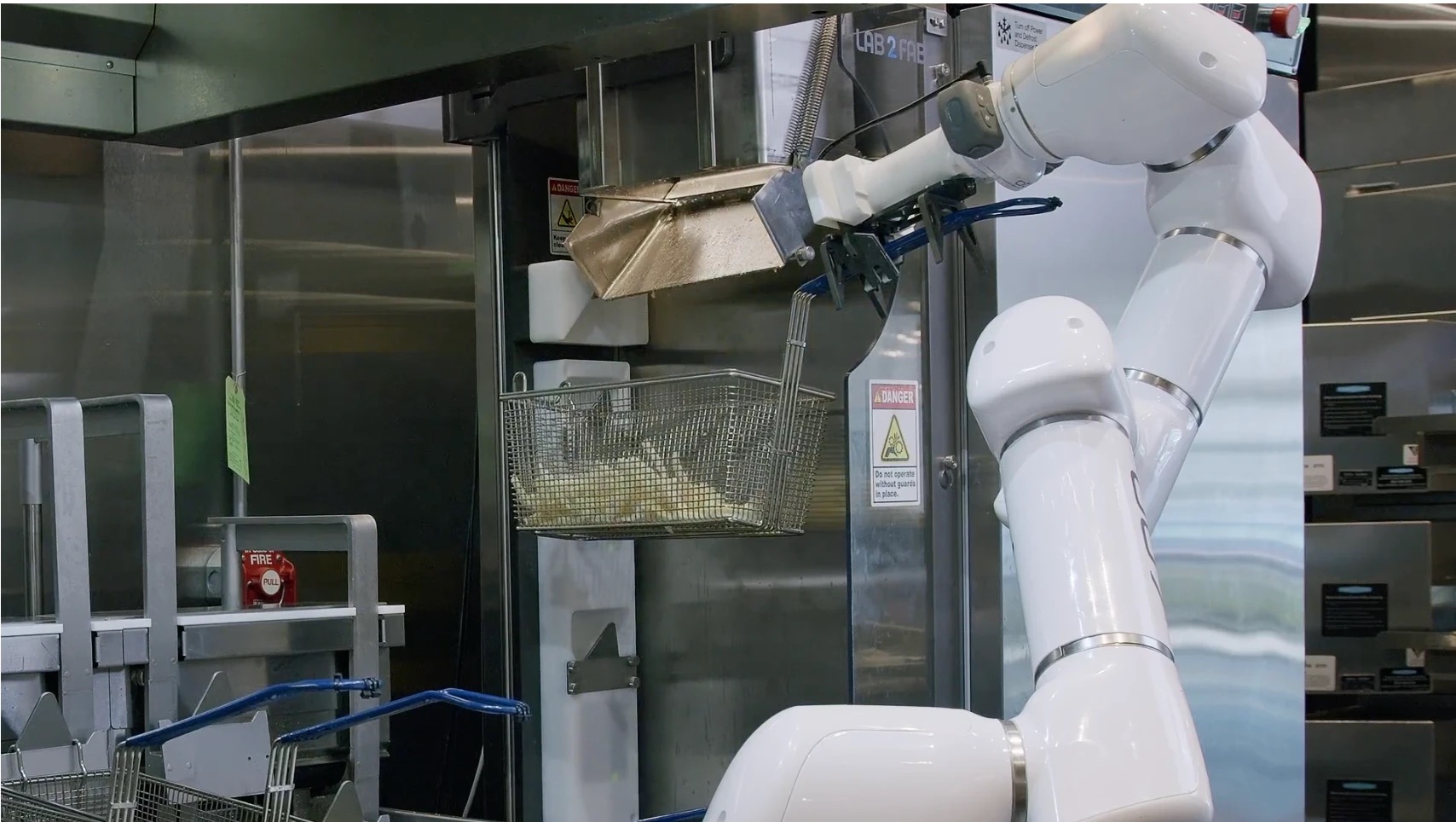
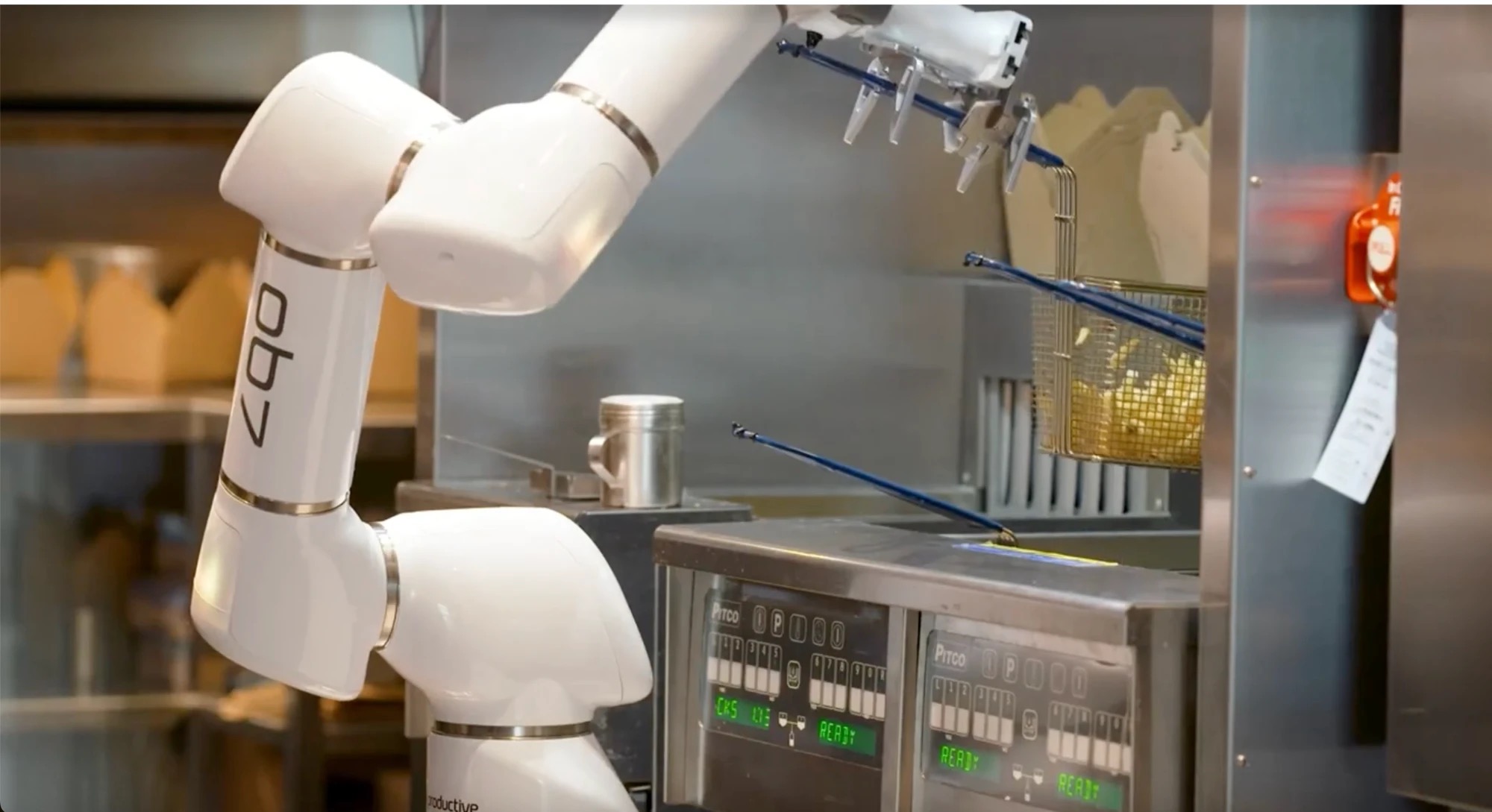
PizzaBot · overview
PizzaBot · introduction
Stills and videos: L2F, Inc. (Lab2Fab) / Icon Group, from FRYBOT and PizzaBot in production. Used to show the product the program was building toward, not as deliverables of this engagement.
How the work ran
Four moves, in this order. Each one let the next one go faster.
Set the roadmap
One roadmap carried the software from concept to a release the first store could take. Acceptance criteria, dependencies and change control sat on it, so a shift in one organization reached the other two as the same note.
Groom the backlog
A weekly grooming session turned the roadmap into stories the twenty-plus person team could actually pick up. Sprint planning in Jira set the next two weeks of work. The backlog was the artifact everyone read.
Clear the path
A standing part of the role was removing what was in front of the team. A blocked integration test, a missing hardware spec, a dependency on a partner engineer: each one was named, assigned and followed until the team could keep moving.
Re-plan at the hardware line
Software timelines kept meeting physical constraints: a part had a lead time, a thermocouple reading was drifting, a cabinet was late from the factory. The backlog was resequenced around what hardware allowed, so the team worked on what could move instead of waiting on what was blocked.
Backlog grooming across Icon, Middleby and Sonic representatives. One session, one list, one next-steps note.
The sprint. Planning on day one, daily standup, mid-sprint check, review and retro at the close.
A readiness review against the acceptance criteria on the roadmap. Each one closed a release or named what still had to clear.
Three organizations, one backlog
Icon wrote the software. Middleby built the hardware. Sonic Drive-In would deploy it. None of them reported to the others, and none of the team reported to the role. The authority was the plan: one roadmap, one backlog, one readiness record that all three read.
Three organizations, one backlog. The program was the piece that made them move together. Particles are drawn to show flow and are not meant to measure volume.
Twenty-plus people, three organizations
The team spanned software engineers, controls engineers, mechanical engineers, quality and operations. Icon and Middleby staff sat on it directly. Sonic’s team joined on grooming and readiness. The program held the plan and the priorities, so a cross-disciplinary group stayed on one set of decisions instead of pulling three ways.
None of the people on the team reported to the role. The authority was the plan, the backlog, and the readiness record. Decisions and shifts were over-communicated across company lines, because silent handoffs between organizations were the failure mode the program could not afford.
Mark counts are illustrative and do not describe the exact headcount on either side.
What the role carried
Three responsibilities sat with the Senior Program Manager through the engagement. The interface, control and data layer that made the robots usable, controllable and measurable. The cadence that turned a tangled hardware-plus-software problem into a backlog the team could execute. The relationships that kept decisions moving across Icon, Middleby and Sonic without a line of command between them.
The role did not write the control software, and did not design the arm. It held the plan, carried the risk register, and made sure every change traveled.
- Client
- Icon Group, software for autonomous kitchen robots
- Program partners
- Middleby, hardware; Sonic Drive-In, an Inspire Brands chain, the first deployment
- Stations
- FRYBOT, the fry station end to end, and PizzaBot, which sauces, tops and ovens a pizza
- Role
- Senior Program Manager, holding the software roadmap, the release backlog and cross-company alignment across three organizations
- When
- 2022 to 2023
- Method
- One roadmap and one backlog; weekly grooming, two-week sprints in Jira, a readiness review by release
What the program carried across the lab-to-fab gap
“Lab2Fab” is the name of the gap itself: the distance between a working lab prototype and a fabricated product running in the field. A companion paper in this series calls it the Valley of Death. Promising work stalls there not for lack of merit but for lack of the infrastructure to carry it across. On this program, that infrastructure was the plan the three organizations worked from.
The program produced three things that could cross the gap with the product. A roadmap that named every dependency between the arm, the cabinet, the software and the store. A backlog of stories that any of the three organizations could pick up and act on. A readiness record that a release could be judged against, rather than described in a slide.
What this page does not claim
It does not report store counts activated, revenue impact, or labor hours saved. Those belong to the operators and are not reproduced here. The ~3,400 store figure is the Sonic Drive-In footprint the program was built to reach, not a deployed count during this engagement.
The sprint content, the backlog, and the readiness criteria are the client’s. This page describes the shape of the program and the role, not the product internals. The stills and videos are L2F, Inc. (Lab2Fab) material, shown as context.
Hold one plan across three organizations. Keep hardware, software and deployment on one backlog.